
Want to support First Nations people and communities to be safer and more confident online?
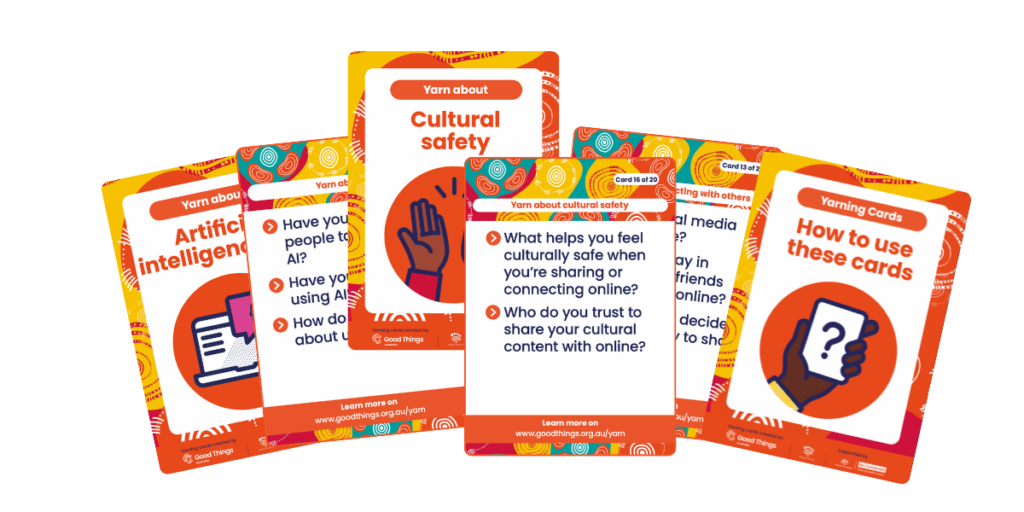
Yarning Cards are a great way to start conversations with the people you support. This companion guide gives you tips to make the most of your Yarning Card set (or order them for your organisation).
What are Yarning Cards?
Asking questions is a great way to get to know someone’s digital skills and level of confidence. The conversations they start will let you see the support people need to learn.
Yarning Cards are a set of 20 cards, each with questions on them that can support you to start conversations about a range of useful topics. The topics include online safety, cultural safety, getting connected, AI, connecting with others and do more online.
5 tips to help you use the Yarning Cards
1. Choose the right topic
There’s 19 different topics to choose from in the cards and one how to card in each pack. Each topic has a couple of questions from the card pack that your learners will relate to or that can link with what you will be supporting them to learn that day.
2. You can use them in lots of different ways.
The Yarning Cards can be used in groups or with individuals you are supporting one on one. You can use them to start a digital skills learning session as an icebreaker.
You could also use them to assess people’s skills and confidence, so you can tailor your support to their needs and interests. Their answers could even help you to design a whole program of activities!
3. Ask each question, then have examples and follow ups ready
Start by asking the first question on each Yarning Card. The questions on the cards flow in order to help you build the conversation.
To get people talking, you may need to give practical examples of what the question is about, or ask follow up questions. Try to use open end questions that encourage people to share and talk.
Tip: Yarning Cards have been designed with adult learners in mind. eSafety have their own Yarning Card resource that can help you to have conversations with younger people.
4. It may take time to build trust
Trust is so important for digital mentors to have with their learners, but it may take time to develop. Go at their pace and don’t rush it. Focusing on building trust will make the conversations you have using the Yarning Cards better.
Tip: Consider if a Yarning Circle is right for your community. See SBS Learn’s resource on facilitating a Yarning Circle for tips.
5. Learning resources are done for you
Every Yarning Card has a website address on it www.goodthings.org.au/yarn which points to how people can learn more about those topics. This means you don’t have to be the tech expert to start these yarns and can instead focus on being friendly, helpful and encouraging!
The resources are all from reliable sources, and are free to access. When available, we have linked to resources designed with and for First Nations communities.
If you need support to run the rest of the digital skills session after your yarn, take a look at our free Digital Mentor resource library.
Order Yarning Cards
Yarning Card sets are available for free to organisations in the Good Things network, while stocks last. Each organisation working with First Nations communities are eligible to receive one printed pack of cards posted to them. To order your set, log in to my.GoodThings and follow the links to fill in the online form.
Good Things also offers grants to support organisations to run digital skills programs for older Aboriginal & Torres Strait Islanders.
Support for learners using Yarning Cards
We have free, ready to use learning resources for people you are supporting to learn digital skills.
Making the Yarning Cards
Yarning Cards were created through a collaboration by Good Things and Digital Trackers, a First Nations digital inclusion organisation, with the support of the Be Connected program. The Cards were tested by community, including digital mentors who work with First Nations communities and First Nations elders.
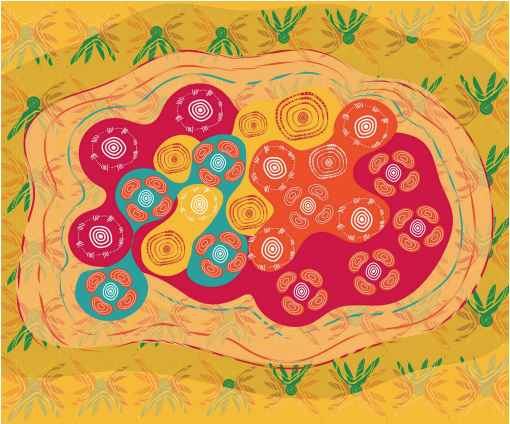
Yarning Card artist Mandy Braddick belongs to the Gumea People of the South Coast NSW of the Wandandian Nation and Dhurga and Dharawal languages. This artwork celebrates strength, unity, and belonging through the connection of generations.
Resource published: July 2026